Creating a lasting memorial for a loved one is a deeply personal and meaningful process. It's a chance to honor their life, share their story, and provide a place for reflection and remembrance. While the desire to express unique sentiments is strong, it's equally important to navigate the practical considerations, particularly the specific requirements set forth by cemeteries. Balancing your desired design with these regulations is key to ensuring your vision can be realized without issue.
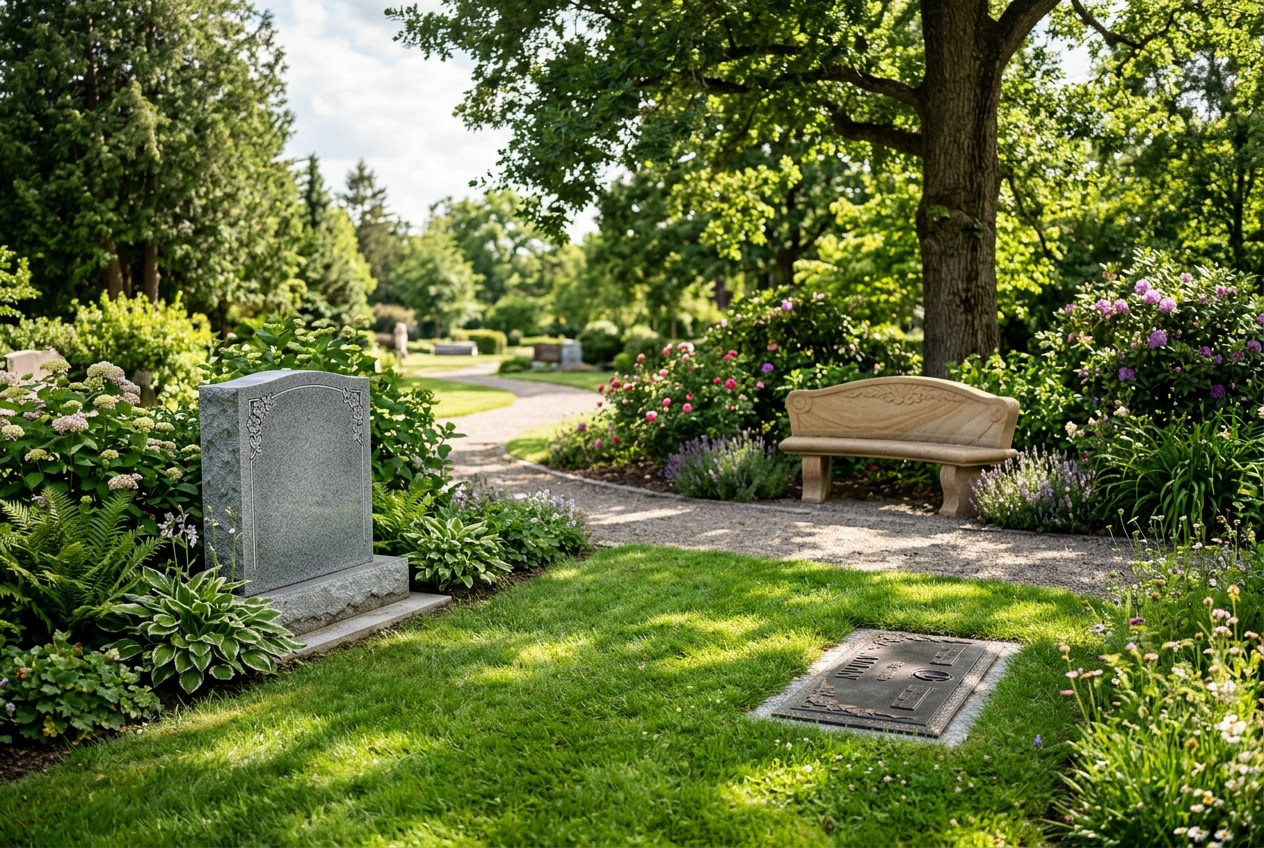
Understanding Cemetery Regulations: Why They Matter
Cemeteries establish rules and guidelines for memorials for several important reasons. These regulations help maintain the aesthetic uniformity of the grounds, ensure the safety of visitors and maintenance staff, and facilitate efficient upkeep. They can vary significantly from one cemetery to another, even within the same town or region. What might be permissible in one location could be strictly prohibited in another.
Common Areas Covered by Regulations:
- Type of Memorial: Some sections of a cemetery might only allow flat lawn markers, while others permit upright monuments, memorial benches, or even specific types of pet stones. Size and Dimensions: There are often strict limits on the height, width, and thickness of a memorial. These dimensions are crucial and must be adhered to precisely. Material and Finish: Most cemeteries specify acceptable materials, typically granite or bronze, and may have rules about the color or finish (e.g., polished, natural). Foundation Requirements: Many cemeteries require memorials to be set on a specific type of foundation, often poured by the cemetery itself, to ensure stability and longevity. Inscriptions and Imagery: While personal messages are encouraged, some cemeteries have guidelines regarding the length of epitaphs, the size of lettering, or even the types of symbols and emblems that can be used. Installation Procedures: Who is allowed to install the memorial (e.g., only approved monument companies, or cemetery staff) can also be part of the regulations.
The crucial first step in any memorial design process is to obtain a clear, written copy of the cemetery's rules and regulations. This proactive approach will save time, prevent potential disappointment, and ensure your design journey is as smooth as possible.
Navigating Design Choices Within Constraints
Once you understand the cemetery's parameters, you can begin to explore design possibilities. This is where a tool like Headstone Designer becomes invaluable. Our free online web app allows families to design a real headstone – be it uprights, hearts, flat lawn markers, pet stones, or memorial benches – all from the comfort of their home, while keeping practical limitations in mind.
Key Design Elements to Consider:
- Memorial Type: If the cemetery specifies a flat marker, Headstone Designer allows you to explore various shapes and sizes within that category. If uprights are permitted, you can visualize different styles and dimensions. Dimensions: As you design, you can letter the names, dates, and an epitaph, and crucially, see letter heights in inches. This helps you ensure your text will fit aesthetically and legibly within the allowed space. Symbols and Emblems: Adding a symbol can personalize a memorial beautifully. Our platform offers a range of options, and you can select those that resonate most, always remembering to verify that the cemetery permits your chosen imagery. Layout and Proportion: Even with restrictions, there's still ample room for creativity in layout. A skilled monument company, working with your design, can help achieve a balanced and harmonious look that respects both your wishes and the regulations.
The Role of Your Monument Company
Your chosen monument company is your vital partner in this process. They are local experts who are often well-versed in the specific regulations of cemeteries in their service area. They can review your design, offer guidance on what is feasible, and often handle the formal approval process with the cemetery on your behalf. Think of them as the bridge between your design vision and the final carved stone.
Once you’ve finalized your design using Headstone Designer, you can send the finished design to your own monument company as a professional proof sheet. This document serves as a detailed blueprint for production. It's essential to remember that nothing is cut until the family signs the proof, ensuring complete satisfaction and compliance before any physical work begins.
Headstone Designer: Empowering Your Vision
Our team at Headstone Designer created this platform to empower families during a challenging time. We understand that visualizing a memorial can be difficult. By providing a user-friendly interface to experiment with designs, fonts, symbols, and layouts, we aim to make the process more accessible and less daunting. This tool is not just for families; we also offer it to monument companies as an embeddable designer for their own websites, streamlining their workflow and enhancing their client experience.
Practical Steps for a Smooth Process:
Contact the Cemetery Early: Before beginning any design work, contact the cemetery directly to obtain a copy of their memorial guidelines. Get them in writing if possible. Communicate with Your Monument Company: Share these guidelines with your chosen monument company. They can interpret the rules and offer expert advice. Design with Flexibility: Use tools like Headstone Designer to explore various options within the given constraints. Be open to minor adjustments that might be required for compliance. Review the Proof Sheet Carefully: Before signing, meticulously review the proof sheet provided by your monument company, checking all names, dates, epitaphs, symbols, and dimensions against both your wishes and the cemetery’s rules.Creating a beautiful and appropriate memorial is a journey that blends personal expression with practical considerations. By understanding and respecting cemetery requirements, and by utilizing helpful tools like Headstone Designer and the expertise of your monument company, you can https://headstonedesigners.com/designs/ successfully balance design and regulations to create a truly meaningful tribute that stands the test of time.